
Traveler Asif Ilyasov’s Notes – “Mongolia”

Dear readers,
We are pleased to present to you the “Traveler’s Notes” by renowned Azerbaijani traveler, hunting expert, and international expedition organizer Asif Ilyasov.
Journey to Mongolia!
On a hot July summer day, I finally managed to visit Mongolia! This country ranks high on the list of elite hunters not only because of the value of its trophies but also due to their rarity. The point is that the wild mountain rams and ibexes that inhabit the Altai, Gobi, and Khangai mountains can only be hunted in Mongolia.
About Mongolia: “Mongol Uls” – this is how the country’s name sounds in the ancient Mongolian language. It is known worldwide as the homeland of Genghis Khan – the great conqueror and ruler, who united scattered steppe tribes and founded a powerful state.
Located in East Asia, Mongolia shares borders with Russia and China. The country has a sharply continental climate – winters are harsh and freezing, while summers are dry and extremely hot. Temperatures can drop to -35°C in winter and rise up to +35°C in summer. Rain and snowfall are rare, mostly occurring in the mountainous regions of the northwest.

For most people, Mongolia is imagined as an endless steppe, but this is not true — most of the country is mountainous. Its highest peak is Khüiten Uul (Cold Peak), located at the junction of the Saylyugem, Mongol, and South Altai mountain ranges. Khüiten Uul stands at 4,374 meters. Many rivers originate from the Mongolian mountains, including the Selenga, Kherlen, Onon, and Khalkhyn Gol. Mongolia is also rich in lakes, one of which is Lake Khövsgöl, with a depth of 238 meters and water composition similar to Lake Baikal. For this reason, it is often called the “little brother” of Baikal.
The Gobi Desert, one of the world’s most dangerous desert zones, stretches across Mongolia and neighboring China. In ancient times, this area was known as the Shamo Desert.
The Mongolian landscape combines mountain, taiga, steppe, and desert flora and fauna. Here, you can find Siberian pine, birch, wild rose hips, and hawthorn. Among shrubs and grasses grow black currants, wild roses, wormwood, and sagebrush.
The wildlife includes lynx, deer, wolves, foxes, wild camels, ibex, bears, and antelopes. Alongside common wild geese and ducks, the beautiful cranes are often seen here.
Mongolian rivers and lakes are rich in fish species such as taimen, lenok, trout, and grayling.
Interesting fact: To catch an adult taimen weighing up to 80 kilograms, anglers from the USA, Japan, Russia, and Australia flock to Mongolia. Usually, a lucky angler who catches a taimen takes a few photos and then releases the fish back into the water.

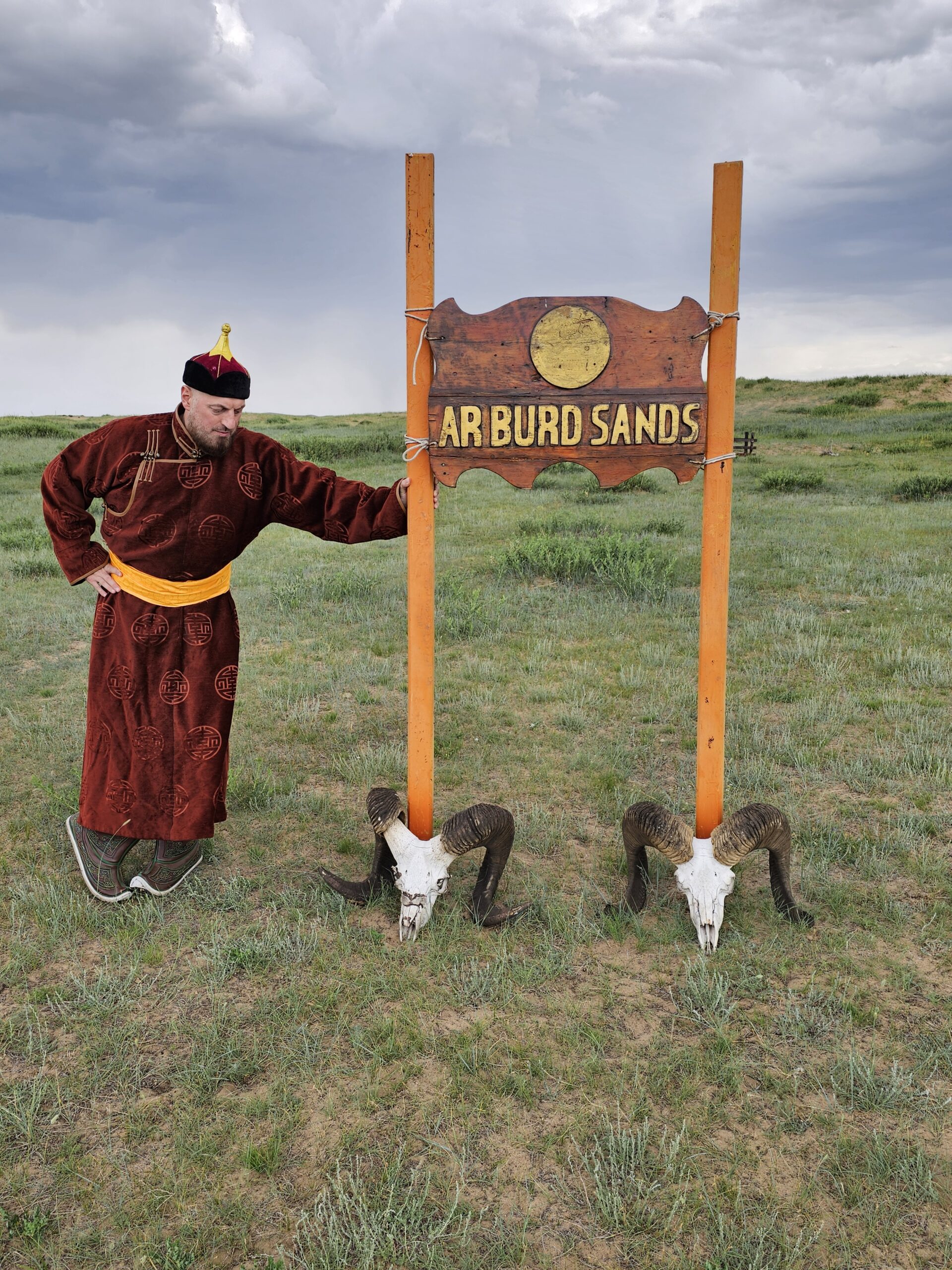
Interesting fact: A large number of dinosaur fossils have been found in the Gobi Desert — including predatory Velociraptors and Tarbosaurus, as well as herbivorous Protoceratops. The most famous paleontological discovery is called the “Fighting Dinosaurs” — the remains of a Velociraptor and a Protoceratops that died locked together during a landslide.

On the very first day, a hunter from the USA immediately got the trophy he had dreamed of. However, it took us several days to find the ibex — although we saw plenty of them, we were specifically searching for an older male.
The Mongolians are excellent organizers — everything from transportation, accommodation, and food to the hunting process itself was arranged at a high level.
This was our first hunting adventure in Mongolia, but certainly not the last!
Author: Asif Ilyasov
Photo: Asif Ilyasov